
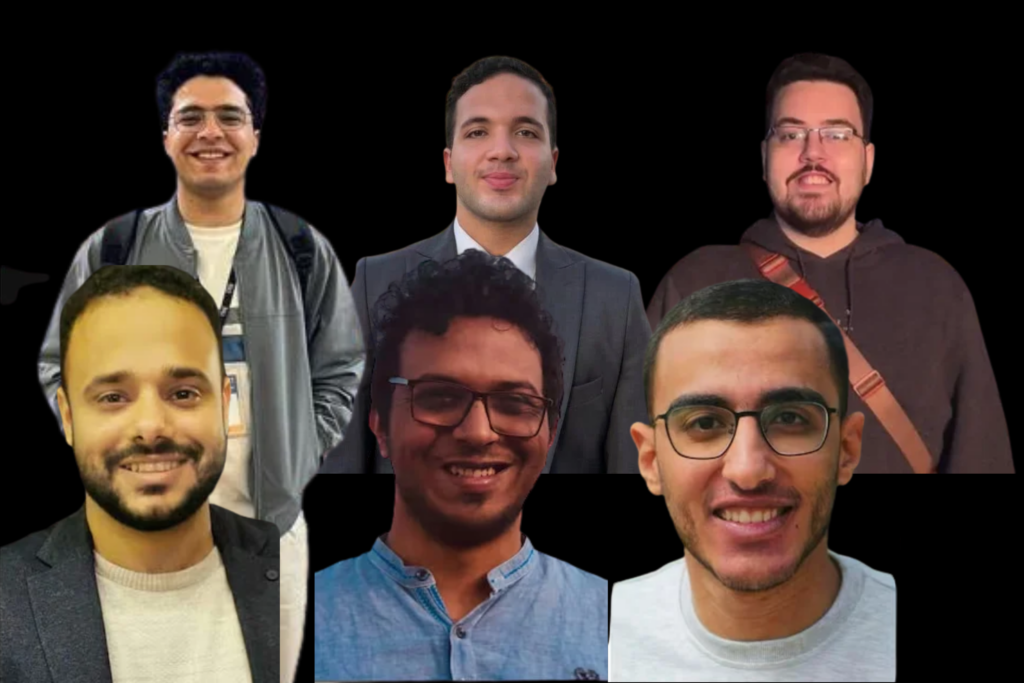
Egyptian security forces have detained all six journalists working for the independent media platform Matsadaash, raising renewed concerns over the treatment of independent journalism and the use of detention to pressure media organizations.
The arrests began when security forces raided the homes of journalists Mohamed Ashraf Abu Emeira and Abdallah Qadry, detaining them on Monday evening and early Tuesday morning. By Tuesday, authorities had also arrested Islam Barakat at his home in Gharbiya and Omar Helal at his residence in Port Said. The remaining two journalists, Mohamed Mahmoud and Mohamed Adel, were arrested on the streets of Cairo.
The Egyptian Initiative for Personal Rights (EIPR) condemned the arrests. The Committee to Protect Journalists (CPJ) also expressed alarm at the detention of an entire newsroom, describing the case as a significant escalation in the pressure on independent media in Egypt.
CPJ Regional Director Sara Qudah urged the international community to pay attention to the case, warning that the arrests risk deepening a climate of fear for journalists and threatening their ability to report freely and independently.
Egyptian Authorities Accuse Matsadaash of Spreading Disinformation
On Thursday, Egypt’s Interior Ministry accused Matsadaash of attempting to destabilize the country through disinformation. In a statement published on Facebook, the ministry described the platform as an unlicensed, foreign-run page that disseminates false information.
The statement also alleged links between Matsadaash, its founder Abdelrahman Mansour, and the Muslim Brotherhood, which Egypt designated as a terrorist organization in 2013.
Mansour rejected the allegations in a phone conversation with CPJ, denying any connection between the platform and the Muslim Brotherhood. He said authorities had previously investigated similar accusations following the 2023 arrest of former Matsadaash colleague Karim Asad, who was released within 36 hours.
Mansour maintained that the platform remains committed to independent journalism and argued that the accusations misrepresent its identity and work.
Journalists’ Whereabouts Remain Unknown
Mansour said the six journalists had been held for more than 72 hours without their whereabouts being disclosed. According to his account, they had also been denied contact with their families and access to their lawyers at the Egyptian Initiative for Personal Rights.
He called on authorities to disclose where the journalists are being held, allow them to communicate with their families and legal representatives, and release them immediately.
The case has heightened concerns about legal safeguards and transparency surrounding the detention of journalists in Egypt. CPJ has documented the country’s continued imprisonment of media workers; its database of currently imprisoned journalists lists those held in the country.
CPJ contacted Egypt’s Public Prosecutor’s Office for comment but had not received an immediate response at the time of its report.
At Free Press Alliance, we condemn the detention of all six Matsadaash journalists and call on Egyptian authorities to disclose their whereabouts, guarantee immediate access to their families and lawyers, and release them unless lawful grounds for their continued detention are established through due process.
Allegations of disinformation or unlawful activity must be addressed through transparent legal procedures and supported by evidence. They must not be used to intimidate journalists or obstruct independent reporting. Preventing media workers from contacting their families or legal representatives raises serious concerns about their rights and the transparency of the proceedings.
The detention of an entire newsroom threatens more than the freedom of the individuals involved. It also disrupts the public’s access to independent information and sends a chilling message to other journalists and media organizations.
Free Press Alliance urges the Egyptian authorities to respect press freedom, uphold due process, and ensure that journalists can work without intimidation or arbitrary detention. Independent journalism is essential to public accountability, and reporting must never become grounds for persecution.