
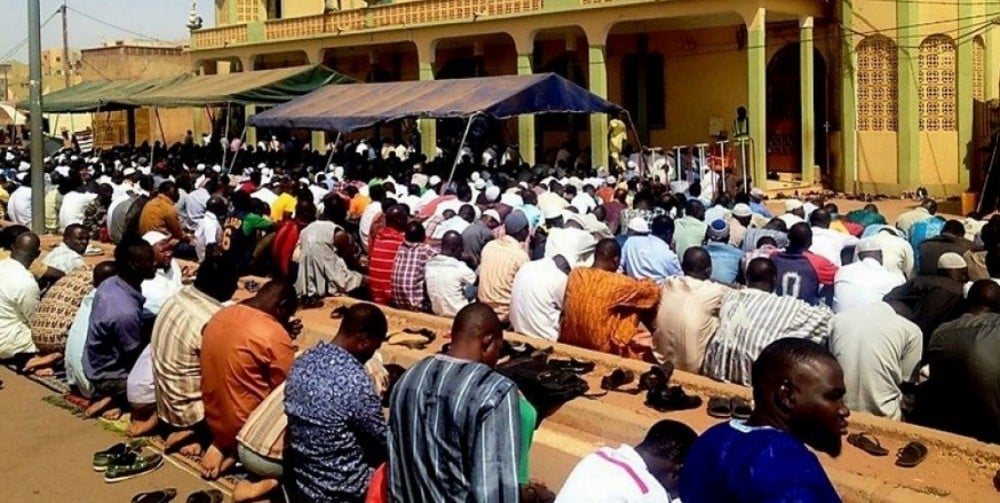
Nearly 100 supporters of Imam Mohamed Ishaq Kindo, vice president of Burkina Faso’s Sunni Movement, were released on October 4, 2026, after spending more than four months in detention following a protest calling for the imam’s release.
According to the Media Foundation for West Africa (MFWA), the demonstrators were arrested on May 26 in the capital, Ouagadougou, after gathering to demand Kindo’s release. The imam had been detained earlier that day, two days after publicly criticizing a proposed law on religious freedoms.
Despite the release of his supporters, Kindo remains in custody. Authorities have not publicly disclosed where he is being held or explained the legal grounds for his continued detention.
Protest Followed Dispute Over Religious Freedom Law
The arrests took place amid controversy over proposed legislation governing religious activities in Burkina Faso. The draft law prohibits the establishment of places of worship in public institutions, including government offices, hospitals, and military barracks. It also introduces measures intended to limit noise pollution associated with religious activities.
Kindo’s criticism of the proposed legislation preceded his arrest. On June 20, Burkina Faso’s transitional legislative assembly adopted the Religious Freedoms Law.
Following their arrests, the demonstrators were taken to a camp in Ouagadougou for what authorities described as “civic and citizenship training.” A video circulated days later showed detainees wearing military-style uniforms and participating in drills.
Images shared after their release showed the former detainees with shaved heads and wearing military training uniforms. After more than four months in custody, they have now been reunited with their families.
The MFWA welcomed the protesters’ release but raised concerns about the length of their detention for participating in a demonstration.
Imam Kindo Remains Detained as Mosque Stays Closed
While his supporters have returned home, Kindo remains detained, with no public information about his location or the legal basis for his continued confinement.
The main mosque of the Sunni Movement has also remained closed since May 28, following tensions surrounding the imam’s arrest.
The MFWA has called on Burkina Faso’s authorities to disclose Kindo’s whereabouts, clarify the grounds for his detention, and release him. The organization has also urged authorities to reopen the mosque and engage with religious communities through dialogue rather than coercive measures.
The case follows another reported disappearance involving a religious leader who criticized the same draft legislation. Imam Mahmoud Barro has been missing since March 31, 2026, according to the MFWA. The organization has called on authorities to clarify his fate and whereabouts.
Free Press Alliance: Protect Freedom of Expression, Religion, and Peaceful Assembly
At Free Press Alliance, we are concerned by the prolonged detention of nearly 100 demonstrators and the continued detention of Imam Mohamed Ishaq Kindo without publicly disclosed information about his whereabouts or the legal grounds for holding him.
The release of the protesters is welcome, but their months in custody raise important questions about the protection of peaceful assembly and fundamental freedoms. Authorities must ensure that individuals are not subjected to prolonged detention simply for participating in demonstrations or expressing their views on public policy.
We urge Burkina Faso’s authorities to disclose Kindo’s place of detention, clarify his legal status, and ensure that his rights are respected. We also call for the reopening of the Sunni Movement’s mosque and for a transparent investigation into the disappearance of Imam Mahmoud Barro.
Freedom of expression, religion, and peaceful assembly are essential rights. Governments must uphold these protections and address disagreements with religious communities through lawful, transparent, and constructive engagement rather than measures that restrict fundamental freedoms.