Journalists often rely on confidential sources to investigate corruption, government misconduct, corporate wrongdoing, and other matters of public interest. But when authorities use subpoenas to compel journalists to reveal sources, unpublished materials, communications, or details about their reporting, the consequences can extend far beyond the individual journalist.
A subpoena is a legitimate legal instrument in many circumstances. However, when it is used unnecessarily or disproportionately against journalists, it can interfere with the independence of the press and undermine the public’s right to know.
What is a subpoena?
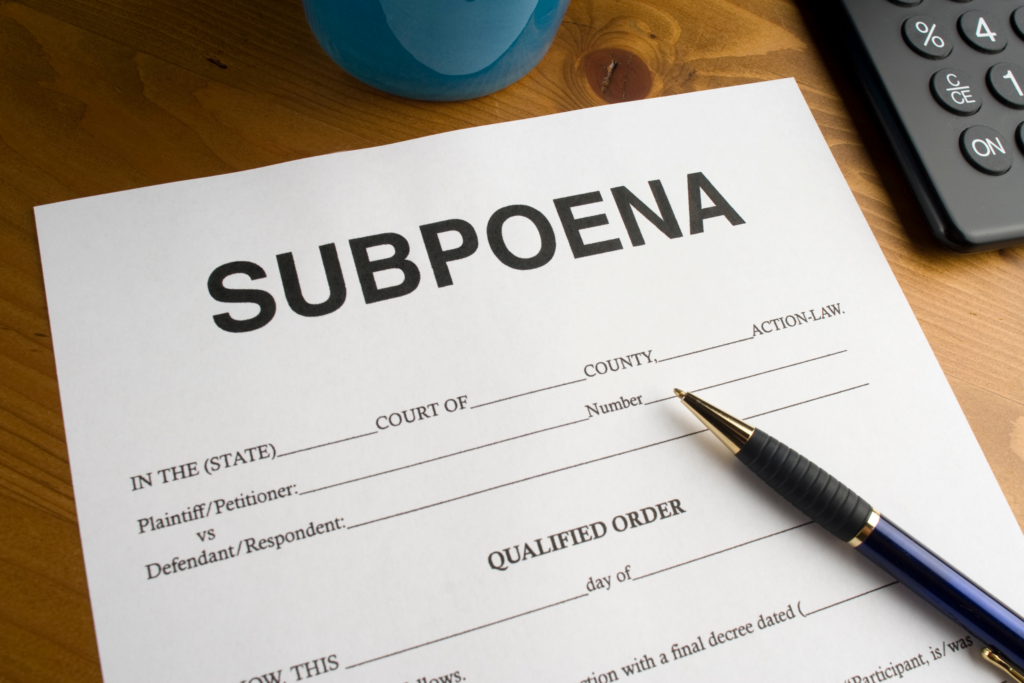
A subpoena is a legal demand requiring a person or organization to provide documents, information, or testimony. Journalists and news organizations can receive subpoenas in civil or criminal proceedings, including demands for unpublished reporting materials or information that could identify confidential sources.
The problem is not that journalists should be automatically exempt from legal proceedings. Rather, press freedom requires safeguards when authorities seek information obtained through newsgathering.
The Reporters Committee for Freedom of the Press warns that subpoenas and government searches directed at members of the press can pose a serious threat to newsgathering and reporting. It also notes that forcing journalists to disclose confidential sources or unpublished information can interfere with the media’s independence from government.
Why are confidential sources important?
Confidential sources are often essential to investigative journalism. Whistleblowers, government employees, corporate insiders, and other individuals may only agree to provide information if journalists can protect their identities.
The European Court of Human Rights has repeatedly recognized protection of journalistic sources as one of the fundamental conditions of press freedom. In Goodwin v. the United Kingdom, the Court held that an order requiring a journalist to reveal a source violated Article 10 of the European Convention on Human Rights because it was not justified by an overriding public-interest requirement.
The Court has explained why this protection matters: without confidentiality, sources may be discouraged from helping the press inform the public about matters of public interest, potentially undermining journalism’s watchdog role.
This means that protecting a journalist’s source is not simply about protecting a private relationship between a reporter and an individual. It can be essential to ensuring that information in public interest reaches society.
How subpoenas can threaten press freedom
1. They can expose confidential sources
The most direct threat is the forced disclosure of a source’s identity.
A subpoena can seek emails, messages, telephone records, notes, unpublished photographs, recordings, or testimony that could reveal who provided information to a journalist.
This can put sources at risk of retaliation and discourage others from speaking to journalists in the future.
The European Court of Human Rights has emphasized that an overriding public-interest requirement must justify an order interfering with journalistic-source confidentiality.
The protection is therefore not absolute, but disclosure should be exceptional and subject to scrutiny.
2. They can discourage whistleblowers
The consequences can extend to people who have information they believe the public needs to know.
A potential whistleblower who sees journalists being compelled to identify their sources may decide that approaching the media is too risky. That can prevent information about corruption, abuse, misconduct, or other wrongdoing from ever reaching the public.
The European Court of Human Rights has specifically warned that without source protection, sources may be deterred from assisting the press.
This creates a chilling effect: people become less willing to speak, and journalists may become more reluctant to pursue sensitive investigations.
3. They can interfere with the newsgathering process
Subpoenas can also affect journalism even when a journalist ultimately succeeds in resisting them.
Responding to a subpoena can require journalists and editors to spend significant time reviewing documents, consulting lawyers, preparing legal responses, and appearing in court.
The Reporters Committee for Freedom of the Press notes that subpoenas seeking confidential sources or unpublished information can divert staff and resources away from newsgathering while creating serious First Amendment concerns in the United States.
For small newsrooms, freelancers, and independent journalists, the financial and practical burden of defending against a subpoena can be particularly significant.
4. They can encourage self-censorship
The impact of a subpoena does not necessarily end with the legal dispute.
If journalists believe that certain investigations could result in subpoenas, they may become more cautious about pursuing stories involving powerful institutions, government agencies, corporations, or politically sensitive subjects.
The Reporters Committee has noted that compelled disclosure can deter coverage of matters likely to generate subpoenas.
This is one of the most concerning consequences of legal pressure against journalists: a story does not have to be censored for the public to lose access to it. It may simply never be investigated or published.
Subpoenas and press freedom in the United States
The United States provides an important example of the legal complexities surrounding subpoenas against journalists.
There is currently no comprehensive federal shield law protecting journalists from being compelled to disclose sources. However, most federal appellate courts have recognized some form of qualified reporter’s privilege, while many states have enacted shield laws providing varying levels of protection.
The protections are not uniform. They can depend on the jurisdiction, the type of legal proceeding, whether the information is confidential, and whether alternative sources of information are available.
The Reporters Committee explains that in jurisdictions applying a qualified privilege, courts may consider factors such as whether the information is relevant and material, whether it can be obtained from another source, and whether there is a compelling public interest in disclosure.
This variation means that journalists can face very different levels of protection depending on where they work.
The European perspective
Protection of journalistic sources is also recognized as an important component of freedom of expression in Europe.
Article 10 of the European Convention on Human Rights protects freedom of expression, including the freedom to receive and impart information. The European Court of Human Rights has repeatedly linked this protection to the confidentiality of journalistic sources.
In Goodwin v. the United Kingdom, the Court established that an order requiring a journalist to identify a source must satisfy a particularly demanding public-interest test. The Court found that protecting journalistic sources is essential to maintaining the press’s ability to perform its role as a public watchdog. (European Court of Human Rights)
The principle is therefore broader than simply protecting individual journalists. It recognizes that source confidentiality helps maintain the flow of information to the public.
When can disclosure be justified?
Protecting journalistic sources does not mean that every subpoena directed at a journalist should automatically be rejected.
There can be exceptional circumstances in which authorities have a legitimate need for information held by journalists. The European Court of Human Rights has recognized that source protection can be subject to exceptions, particularly when there is a sufficiently strong public interest and the interference is proportionate.
Before compelling disclosure, authorities and courts should therefore consider questions such as:
- Is the information genuinely necessary?
- Can it be obtained through another source?
- Does the request concern a confidential source?
- Does it seek unpublished journalistic material?
- Is there a compelling public interest in disclosure?
- Is the request narrowly tailored?
- Would disclosure expose a source to retaliation or other harm?
- Would the legal demand interfere disproportionately with the journalist’s ability to report?
These safeguards help ensure that legitimate law-enforcement needs do not unnecessarily undermine press freedom.
Why this matters beyond the newsroom
The consequences of subpoenas against journalists ultimately affect the public.
A free press allows citizens to learn about corruption, government failures, abuses of power, corporate misconduct, and other issues that affect society.
When sources are afraid to speak, journalists have fewer opportunities to investigate.
When journalists fear legal consequences for protecting their sources, some investigations may never take place.
And when important investigations disappear before they are published, the public loses information it may need to hold powerful institutions accountable.
The European Court of Human Rights has emphasized that the protection of journalistic sources safeguards not only journalists and their sources but also the public’s interest in receiving information from anonymous sources.
What can journalists do when they receive a subpoena?
Journalists who receive a subpoena should not assume that they must immediately hand over their materials or identify a source.
The exact legal response depends on the country and jurisdiction, but journalists should generally:
- Notify their editor or news organization immediately.
- Seek advice from a lawyer familiar with media law and journalist-source protection.
- Determine exactly what information or materials the subpoena seeks.
- Identify whether confidential sources or unpublished materials are involved.
- Check whether a shield law, reporter’s privilege, or other legal protection applies.
- Determine whether the demand can be challenged or narrowed.
- Avoid voluntarily disclosing protected information before obtaining legal advice.
The Reporters Committee for Freedom of the Press maintains a detailed compendium explaining reporter’s privilege and subpoena protections across U.S. states and federal circuits.
Journalists working outside the United States should consult the relevant national laws and professional organizations, as protections vary significantly between jurisdictions.
Protecting the public’s right to know
A free press requires more than protection from direct censorship. Journalists must also be able to investigate, communicate with sources, and report matters of public interest without facing disproportionate legal pressure.
Subpoenas can be legitimate legal tools. But when they are used unnecessarily to uncover confidential sources, obtain unpublished reporting, or place excessive pressure on journalists, they can undermine the independence of the press.
Protecting journalistic sources ultimately protects more than reporters. It protects whistleblowers, strengthens investigative journalism, and helps ensure that information of public interest can reach the public.
A society cannot hold powerful institutions accountable if the people with information are too afraid to speak, and the journalists who would listen are too afraid to ask.