Press freedom is a cornerstone of democratic societies. It allows journalists to gather, produce, and share information without interference, intimidation, or fear of retaliation. When journalists are prevented from carrying out this role, the public loses access to information that is essential for accountability, transparency, and informed decision-making.
But what exactly qualifies as a press freedom violation?
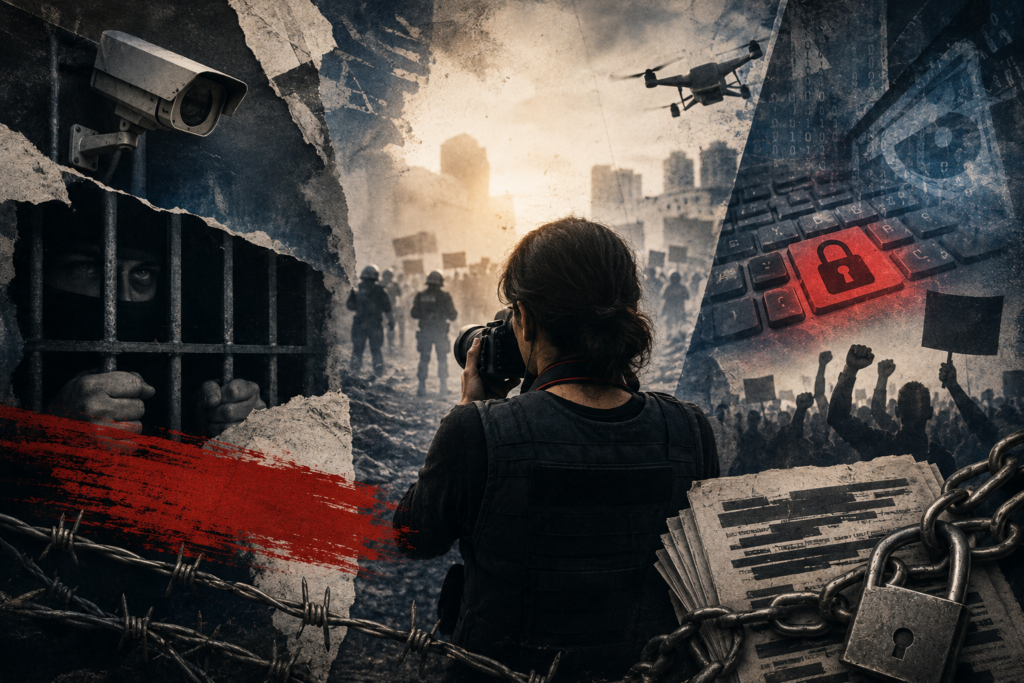
A press freedom violation occurs when an individual, organization, or government interferes with journalists’ or media outlets’ ability to report freely, safely, and independently. These violations can take many forms, ranging from physical violence and imprisonment to censorship, surveillance, and legal harassment.
Physical attacks and violence
One of the most visible forms of press freedom violations is violence against journalists. Reporters covering corruption, conflict, protests, organized crime, or political affairs are often exposed to physical attacks because of their work.
Examples include:
- Assaulting journalists while they are reporting
- Threatening journalists with violence
- Kidnapping reporters
- Torturing detained journalists
- Killing journalists because of their reporting
International organizations consider attacks on journalists not only violations of individual rights but also attacks on the public’s right to access information. UNESCO has repeatedly identified violence against journalists as one of the most serious threats to press freedom worldwide.
Arbitrary arrests and detention
Governments sometimes use criminal charges, national security laws, or vague accusations such as spreading “false information” to silence journalists.
Press freedom violations in this category include:
- Arresting journalists for their reporting.
- Holding reporters without charge.
- Imprisoning journalists for publishing information of public interest.
- Detaining journalists to intimidate media organizations.
The imprisonment of journalists has reached record levels in many parts of the world, making arbitrary detention one of the most common forms of repression against the press.
Censorship
Censorship occurs when authorities, corporations, or other actors prevent information from reaching the public.
Examples include:
- Blocking news websites.
- Removing articles for political reasons.
- Banning coverage of specific topics.
- Prohibiting journalists from reporting on certain events.
- Restricting access to government information.
While some restrictions on expression may be lawful under international human rights standards, blanket bans or politically motivated censorship often constitute violations of press freedom.
Surveillance and privacy violations
Journalists depend on confidential communication with sources. Surveillance can compromise those relationships and undermine investigative reporting.
Press freedom violations may include:
- Monitoring journalists’ communications.
- Hacking devices or accounts.
- Tracking reporters through spyware.
- Demanding access to confidential sources.
- Conducting unlawful searches of journalistic materials.
When journalists cannot guarantee source protection, important information about corruption, abuse, or misconduct may never reach the public.
Online harassment and digital attacks
Digital threats have become a growing concern for journalists worldwide, particularly women journalists and reporters covering controversial issues.
Examples include:
- Coordinated harassment campaigns.
- Death threats online.
- Doxxing and publication of personal information.
- Cyberattacks against media outlets.
- Gender-based abuse targeting journalists.
Although these attacks occur online, they can have real-world consequences, including self-censorship, psychological harm, and physical danger.
Restrictions on access to information
Journalists require access to public records, official data, government proceedings, and public events to perform their work.
Potential violations include:
- Denying access to public information without justification.
- Preventing journalists from attending public meetings.
- Restricting media access to legislatures or courts.
- Refusing accreditation based on political viewpoints.
Such restrictions can limit public oversight and reduce government accountability.
Attacks on media organizations
Press freedom violations do not affect only individual journalists. Media organizations themselves may be targeted.
Examples include:
- Arbitrary closure of media outlets
- Revocation of broadcasting licenses for political reasons
- Seizure of equipment
- Blocking distribution channels
- Economic pressure aimed at forcing editorial changes
When media organizations are silenced, entire communities may lose access to independent information.
Conclusion
A press freedom violation occurs whenever journalists or media organizations are prevented from reporting freely, safely, and independently. These violations can include violence, imprisonment, censorship, surveillance, legal harassment, online abuse, restrictions on access to information, and attacks on media outlets.
Recognizing these violations is the first step toward defending the fundamental right of every society to receive and share information without fear.