Press freedom across Latin America faces persistent threats ranging from censorship and surveillance to violence, judicial harassment, exile, and disinformation. In response, a network of regional organizations has emerged to defend journalists, document abuses, provide legal and emergency assistance, and advocate for stronger democratic protections.
These organizations are playing a crucial role in supporting independent journalism and protecting freedom of expression throughout the region. Many collaborate through regional alliances such as IFEX-ALC, a coalition of organizations defending free expression across Latin America and the Caribbean.
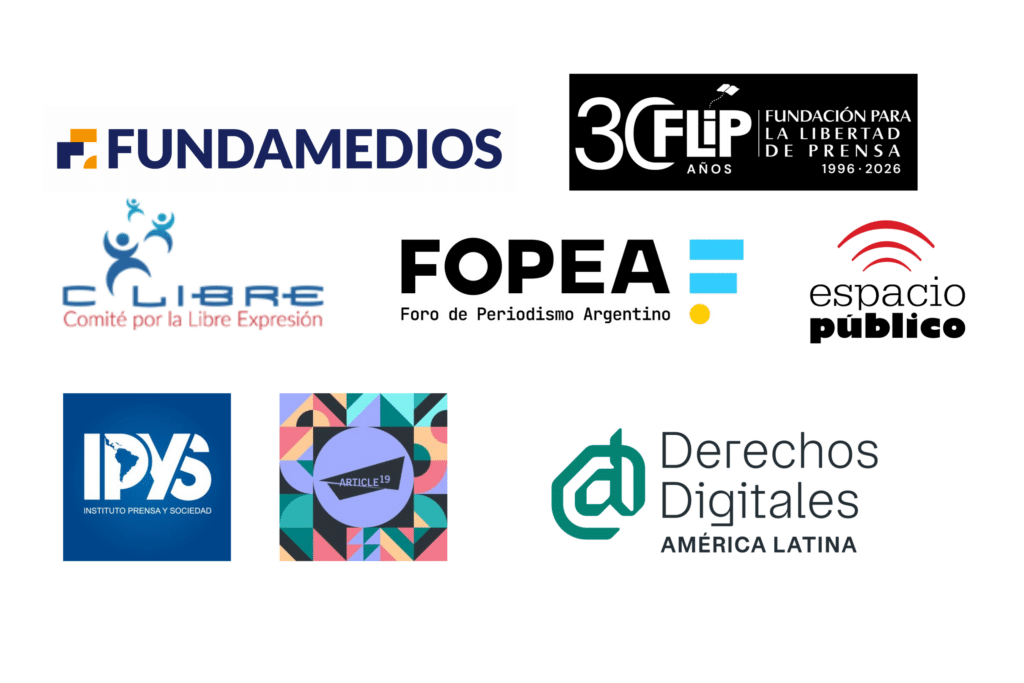
ARTICLE 19 Mexico and Central America
ARTICLE 19 is one of the most prominent freedom of expression organizations operating in Latin America. Named after Article 19 of the Universal Declaration of Human Rights, the organization works to defend freedom of expression and access to information. Its Mexico and Central America office has become especially influential due to its extensive documentation of attacks against journalists, digital surveillance, censorship, and violence linked to organized crime and state actors.
The organization regularly publishes reports on press freedom conditions in countries such as Mexico, Guatemala, El Salvador, and Honduras. It also provides advocacy, legal analysis, and emergency support for journalists at risk. ARTICLE 19 has participated in international observation missions focused on democratic backsliding and attacks on independent media in Central America.
Fundación para la Libertad de Prensa (FLIP)
Based in Colombia, FLIP is widely recognized as one of the most important press freedom organizations in Latin America. The organization monitors attacks against journalists, provides legal assistance, and advocates for the protection of freedom of the press and access to information.
FLIP’s work has been especially significant in documenting violence against journalists in Colombia, including threats from armed groups, political actors, and criminal organizations. The organization also operates protection and monitoring initiatives that track violations against media workers throughout the country.
In recent years, FLIP has expanded its regional role by participating in international press freedom missions in countries experiencing democratic erosion and attacks on journalism, including Guatemala and El Salvador.
Fundamedios
Founded in Ecuador, Fundamedios has become a leading voice in defending press freedom and freedom of expression across the Andean region. The organization initially gained visibility by documenting censorship, state pressure, and attacks on journalists during periods of increased hostility toward independent media in Ecuador.
Today, Fundamedios monitors threats against journalists across several Latin American countries and advocates for stronger democratic protections and transparency. The organization publishes alerts, reports, and recommendations on freedom of expression issues and collaborates with international organizations on regional advocacy efforts.
Instituto Prensa y Sociedad (IPYS)
Instituto Prensa y Sociedad, commonly known as IPYS, is a regional organization dedicated to investigative journalism, press freedom, and transparency. Originally established in Peru, IPYS has expanded its influence across Latin America through training programs, investigative journalism initiatives, and monitoring of attacks against the press.
The organization supports journalists through grants, investigations, educational initiatives, and public advocacy. IPYS has played an important role in strengthening investigative journalism networks in countries facing corruption, political instability, and institutional pressure on the media.
Its Venezuelan branch, IPYS Venezuela, has extensively documented restrictions on media freedom, censorship, and violations against journalists under increasingly authoritarian conditions.
Espacio Público
Espacio Público is one of Venezuela’s leading organizations defending freedom of expression and access to information. Operating in one of the region’s most restrictive media environments, the organization documents censorship, harassment, arbitrary detentions, and attacks against journalists and civil society actors.
The group has become an essential source of information regarding press freedom conditions in Venezuela and regularly publishes reports and alerts on violations committed against independent media and journalists.
Beyond monitoring abuses, Espacio Público also promotes digital rights, legal advocacy, and public awareness campaigns related to democratic freedoms and access to information.
Comité por la Libre Expresión (C-Libre)
C-Libre is a Honduran organization focused on defending freedom of expression, protecting journalists, and monitoring attacks against media workers and human rights defenders.
The organization has documented increasing threats to journalists in Honduras, including violence, intimidation, criminalization, and restrictions on access to public information. C-Libre also works with international organizations to advocate for stronger protections for journalists and democratic institutions.
Its work has become particularly important in the context of political polarization and institutional instability in Honduras.
Derechos Digitales
Derechos Digitales focuses on freedom of expression, privacy, internet governance, and digital rights across Latin America. As journalism increasingly moves into digital spaces, the organization has become an important advocate against online censorship, surveillance, and threats to digital freedom.
The organization conducts research, policy advocacy, and public education campaigns on issues such as online privacy, artificial intelligence, platform regulation, and state surveillance.
Its work highlights how press freedom in Latin America is increasingly connected to digital rights and technological governance.
Foro de Periodismo Argentino (FOPEA)
FOPEA is an Argentine organization dedicated to promoting ethical journalism, press freedom, professional development, and protection for journalists. The organization has become an influential voice in defending independent journalism in Argentina and supporting investigative reporting.
FOPEA organizes training initiatives, monitors attacks on journalists, and promotes ethical standards in media coverage. It also participates in regional freedom of expression networks and collaborative journalism initiatives.
Conclusion
Press freedom organizations in Latin America do far more than document abuses. They provide emergency assistance to journalists at risk, challenge censorship laws, advocate before international human rights bodies, support investigative journalism, and preserve independent reporting in increasingly hostile environments.
Their work has helped expose corruption, defend democratic institutions, protect exiled journalists, and maintain public access to independent information in countries where press freedom remains under severe pressure.
As threats against journalists continue to evolve, these organizations remain essential pillars of accountability, transparency, and democratic resilience throughout the region.