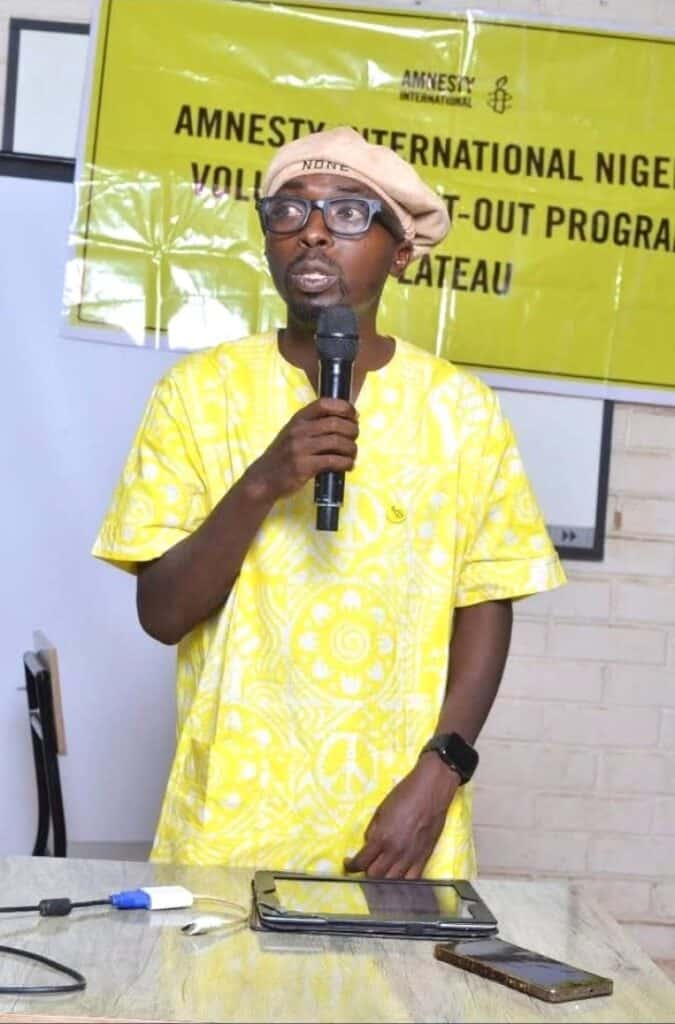
Nigerian journalist and human rights defender Lawrence Zongo was arrested by military personnel on October 5, 2026, while visiting relatives receiving medical treatment at a military hospital in Jos, Plateau State.
Zongo works for TruthNigeria and also volunteers as a reporter with Amnesty International Nigeria. He had reportedly gone to the military medical facility to check on family members who were being treated for injuries sustained during an attack in Bassa Local Government Area the previous night.
Instead, military personnel arrested him at the facility and transferred him to a military barracks, where he remains in custody.
According to Amnesty International Nigeria, which raised the case in a post on X on October 9, Zongo has been held incommunicado and without formal charges since his arrest.
The organization also reported that repeated requests to gain access to him have been rejected by military authorities. The lack of access has raised concerns about his detention, his ability to obtain legal representation, and whether basic due process protections are being respected.
Nigerian Army Has Not Explained the Arrest
The circumstances surrounding Zongo’s detention remain unclear. The Nigerian Army has not publicly explained why he was arrested or identified the legal grounds for holding him.
The denial of access to Zongo has also left concerns about his well-being and whether he can communicate with his family or consult a lawyer.
The Media Foundation for West Africa (MFWA) has called on the Nigerian Army to release him immediately and unconditionally if there is no lawful basis for his continued detention.
If authorities have legitimate grounds for the arrest, the organization insists that Zongo must be promptly brought before a competent court and granted access to legal counsel, his family, and all protections guaranteed under due process.
Free Press Alliance: Authorities Must Respect Journalists’ Rights and Due Process
At Free Press Alliance, we are concerned by the detention of Lawrence Zongo, particularly the reported denial of access to him and the absence of publicly stated reasons for his arrest.
Holding a journalist incommunicado and without charge raises serious concerns about fundamental rights, legal safeguards, and the accountability of security forces. Authorities must provide clear information about the circumstances of his detention and ensure that he can communicate with his family and access independent legal representation.
A journalist’s professional work and human rights activities must never become grounds for intimidation or arbitrary detention. Security forces have an obligation to operate within the law and respect the rights of every individual in their custody.
We call on the Nigerian Army to release Zongo unless there is a lawful basis for his detention and, if charges are pursued, ensure that he receives a fair and transparent legal process.
Protecting journalists also means protecting their fundamental rights when they are outside the newsroom. No one should be deprived of their liberty without legal justification or denied access to the safeguards that protect them from arbitrary treatment.