
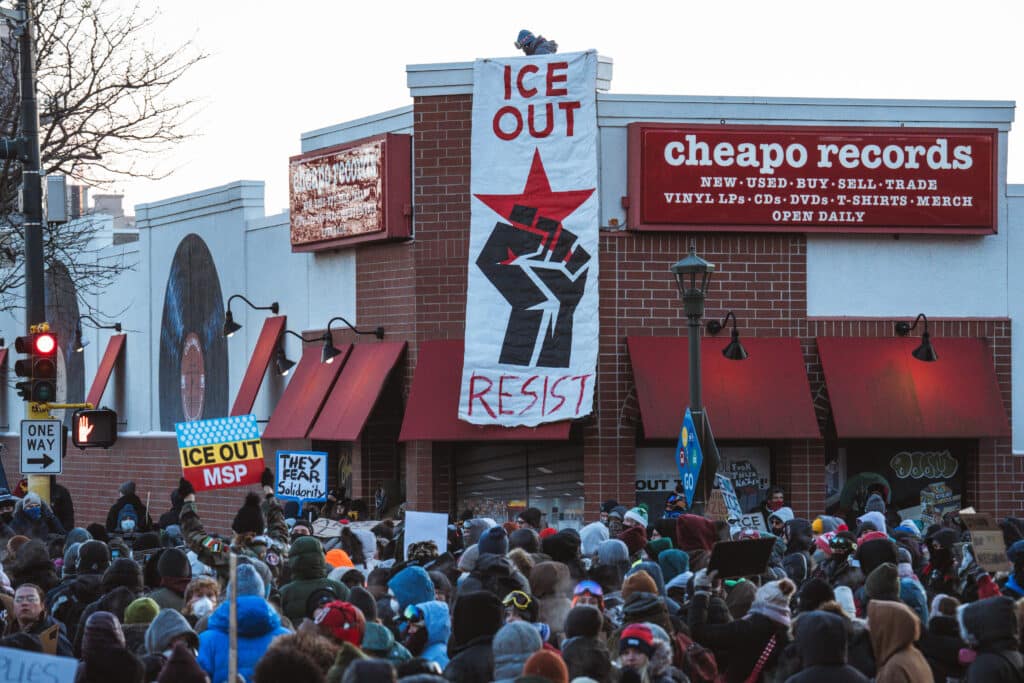
Several journalists were detained in connection with their coverage of protests in Minnesota sparked by federal immigration enforcement operations and fatal shootings by immigration agents.
The demonstrations followed the deaths of Alex Pretti and Renée Good, both killed by U.S. Immigration and Customs Enforcement (ICE) agents in Minneapolis earlier in January, which ignited nationwide protests against ICE tactics and federal enforcement policies.
Federal arrests of Don Lemon and Georgia Fort
On January 29 and 30, 2026, former CNN anchor Don Lemon and independent journalist Georgia Fort were arrested by federal agents for their reporting on an anti-ICE protest that took place on January 18 at Cities Church in St. Paul, Minnesota.
Lemon, now an independent journalist publishing on platforms like YouTube, was taken into custody in Los Angeles by federal agents even though he said he offered to turn himself in voluntarily, according to his attorney. Lemon maintains he was present strictly in a journalistic capacity and denied participation in the protest.
Fort was arrested at her home by federal agents. She told viewers on a Facebook video that she was being detained solely for documenting the protest as a member of the press and expressed concern that her First Amendment rights as a journalist were being violated.
Both journalists were released from federal custody later that week, Lemon without bond and Fort on personal recognizance. Still, they face federal civil rights charges, including alleged conspiracy and interference with the rights of worshippers at the protest event.
Broader protest context
The protest that led to these arrests targeted a church where a pastor also serves as a senior official in the ICE field office. Demonstrators chanted slogans such as “Justice for Renee Good” and “ICE out,” linking the demonstrations to outrage over the deaths of Pretti and Good.
Federal authorities have used civil rights statutes, including the Freedom of Access to Clinic Entrances (FACE) Act, to pursue charges against Lemon, Fort, and several other individuals indicted by a grand jury in Minnesota. The Justice Department’s charges allege disruption of a place of worship during the protest, though critics argue the arrests reflect an aggressive response to journalists documenting a matter of public interest.
The case highlights growing tensions around how journalists are treated when covering politically sensitive protests, particularly those tied to federal enforcement operations. The arrests of Lemon and Fort underscore broader concerns about press freedom in environments where legal actions may be used to discourage reporting on contentious public events.