When a public health crisis erupts, journalism becomes more than a profession; it becomes part of the public response. During epidemics, pandemics, and sanitary emergencies, reporters are tasked with informing the public while avoiding panic, stigma, misinformation, and harm.
The COVID-19 pandemic, Ebola outbreaks in West Africa, cholera crises in Haiti, and recurring outbreaks of mpox, dengue, measles, and avian influenza have demonstrated how media coverage can influence public trust, political responses, and even survival outcomes. Public health communication experts warn that poor reporting during outbreaks can deepen fear, spread false information, and erode confidence in health institutions.
For journalists, covering epidemics requires more than relaying infection numbers. It demands scientific literacy, ethical reporting, trauma awareness, and sensitivity toward affected communities. This guide outlines best practices for reporting on epidemics and sanitary crises responsibly and accurately.
Understand that health crises are also information crises
The World Health Organization and the Centers for Disease Control and Prevention have repeatedly emphasized that communication is central to outbreak response. According to the WHO outbreak communication guidelines, failures in public communication can prolong crises, undermine public trust, and worsen social disruption.
Public health emergencies often create what experts call an “infodemic”, an overwhelming spread of information, including rumors, conspiracy theories, and misleading claims. During COVID-19, false information about vaccines, cures, and transmission circulated rapidly across digital platforms, sometimes faster than verified medical guidance.
Journalists, therefore, play two simultaneous roles:
- Reporting verified developments.
- Countering harmful misinformation without amplifying it.
Responsible reporting can reduce confusion and help communities make informed decisions.
Prioritize accuracy over speed
During outbreaks, information changes rapidly. Preliminary findings, evolving scientific consensus, and emerging variants can create uncertainty. Journalists should resist the pressure to publish unverified claims simply to be first.
The CDC’s Crisis and Emergency Risk Communication framework stresses that credibility depends on transparency, honesty, and clarity.
Best practices include:
- Confirming information with multiple credible medical or scientific sources.
- Distinguishing between peer-reviewed research and preliminary findings.
- Clearly explaining what is known, unknown, and still under investigation.
- Avoiding sensational headlines that exaggerate risk.
When uncertainty exists, reporters should say so directly rather than presenting speculation as fact.
For example:
- Instead of “Deadly virus spreading uncontrollably,” consider “Health officials investigate rising infections as researchers study transmission.”
Precise language helps audiences understand risk without creating unnecessary fear.
Avoid stigmatizing communities
Epidemics often trigger discrimination against certain nationalities, ethnic groups, migrants, LGBTQ+ communities, or marginalized populations.
Coverage during the early stages of COVID-19 contributed to increased anti-Asian racism in many countries. Similarly, HIV/AIDS reporting in the 1980s stigmatized gay communities for years, while Ebola reporting frequently portrayed African societies through dehumanizing stereotypes.
Journalists should avoid:
- Associating diseases with ethnicities or nationalities.
- Using imagery that reinforces racial stereotypes.
- Describing communities as “spreaders” or “carriers.”
- Publishing identifying details of patients unless clearly justified by public interest.
The WHO recommends focusing on factual public health information rather than assigning blame.
Sensitive reporting means recognizing that people affected by disease are not symbols of crisis; they are individuals living through trauma, fear, and uncertainty.
Humanize the story without exploiting suffering
Statistics are essential during epidemics, but numbers alone rarely communicate the lived reality of a crisis.
Strong public health journalism combines data with human-centered storytelling:
- Healthcare workers facing exhaustion.
- Families navigating grief.
- Patients recovering from illness.
- Communities adapting to quarantine or displacement.
However, ethical storytelling requires consent and dignity.
Avoid:
- Filming patients without permission.
- Publishing graphic images solely for shock value.
- Interviewing grieving individuals immediately after traumatic events.
- Treating vulnerable people as emotional props.
Trauma-informed interviewing practices are particularly important during sanitary crises, when interviewees may already be under immense psychological stress.
Learn how to read scientific research
Health journalism increasingly requires interpreting scientific studies, epidemiological models, and medical statistics.
Journalists should understand:
- The difference between correlation and causation.
- Relative risk versus absolute risk.
- The meaning of peer review.
- Sample size limitations.
- The difference between laboratory findings and clinical evidence.
During COVID-19, many preliminary studies circulated widely before being reviewed or replicated, leading to confusion and misinformation.
When reporting on scientific findings:
- Consult independent experts.
- Explain limitations clearly.
- Avoid overstating conclusions.
- Provide context for statistical claims.
Even accurate data can mislead audiences if presented without explanation.
Be careful with visual language
Images strongly shape public perception during epidemics.
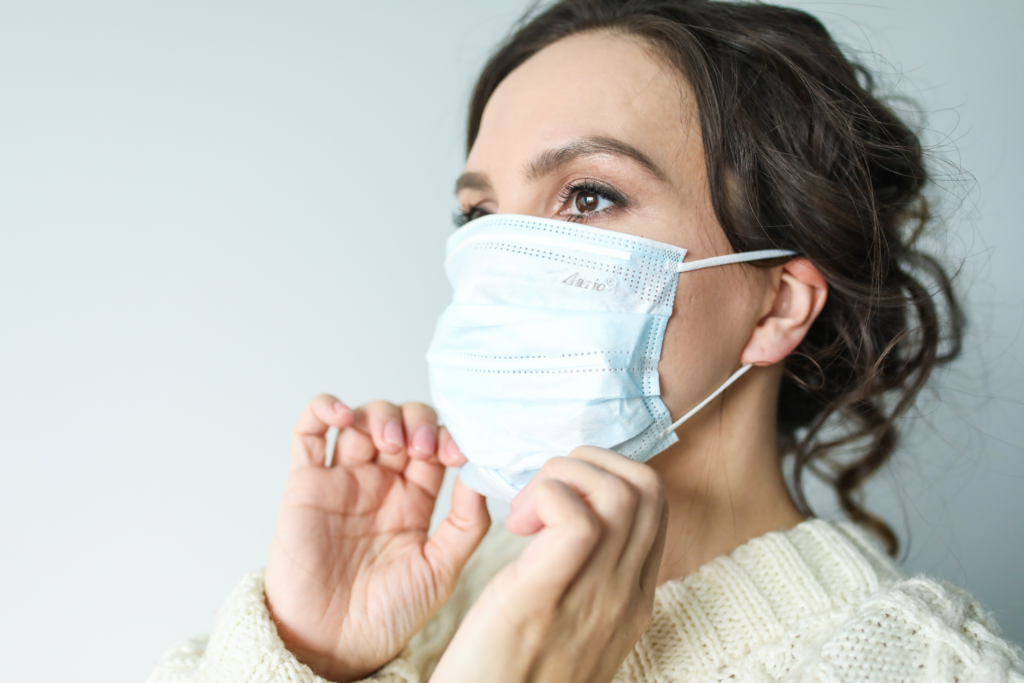
Repeated use of dramatic visuals, body bags, overcrowded hospitals, and masked individuals in distress can create fear and desensitization. Visual framing can also reinforce stereotypes if coverage repeatedly associates disease with certain regions or populations.
Editors should consider:
- Whether images are informative or merely sensational.
- Whether people shown gave informed consent.
- Whether visuals respect privacy and dignity.
- Whether photographs unintentionally stigmatize communities.
Ethical visuals should help audiences understand the reality of a crisis without reducing people to symbols of suffering.
Explain public health measures clearly
Audiences often struggle to understand rapidly changing public health recommendations.
Journalists should translate complex health guidance into accessible language:
- How vaccines work.
- Why quarantine periods change.
- What “community transmission” means.
- How protective measures reduce risk.
The CDC notes that trust and credibility are critical during outbreaks and are strengthened through empathy, openness, and expertise.
Good public health reporting does not simply repeat official statements. It also:
- Questions inconsistencies.
- Explains policy decisions.
- Investigates failures in preparedness.
- Holds institutions accountable.
Critical reporting and responsible communication are not contradictory; both are necessary.
Protect yourself while reporting
Health crises can place journalists themselves at risk.
Reporters covering outbreaks should:
- Follow verified public health guidance.
- Use appropriate protective equipment when necessary.
- Verify safety conditions before entering medical facilities or affected areas.
- Be aware of emotional burnout and secondary trauma.
Freelancers and local reporters are often particularly vulnerable due to a lack of institutional support or insurance.
Newsrooms should provide:
- Safety training.
- Psychological support.
- Access to accurate medical information.
- Clear risk protocols.
Protecting journalists is part of protecting public information.
Conclusion
Public health journalism can save lives, but it can also deepen fear and division if handled irresponsibly.
In times of epidemic and sanitary crisis, journalists are not merely observers. They become intermediaries between science, institutions, and the public. Their work influences how societies understand risk, respond to emergencies, and remember collective trauma.
Sensitive health reporting requires empathy, rigor, skepticism, and humanity. It means recognizing that behind every statistic is a person, and behind every outbreak is a broader social story about inequality, trust, governance, and resilience.
The challenge for journalists is not only to report what is happening, but to do so in a way that informs without harming, explains without sensationalizing, and holds power accountable while maintaining public trust.