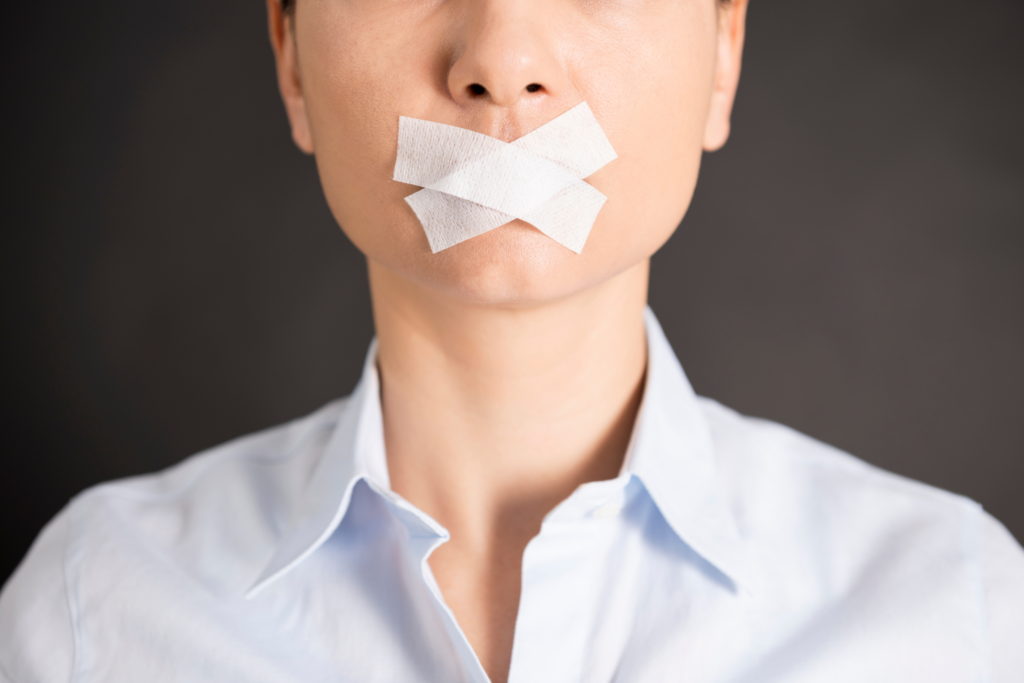
Self-censorship is one of the most pervasive yet least visible threats to press freedom. Unlike direct censorship imposed by governments or institutions, self-censorship operates internally, shaping what journalists choose not to report, investigate, or publish.
In restrictive environments, it can be a survival mechanism. But over time, it erodes journalistic integrity, weakens public accountability, and limits the flow of essential information. According to ICFJ, increasing levels of harassment and pressure, particularly online, are contributing to a growing culture of self-censorship among journalists worldwide.
This guide explores how journalists can recognize self-censorship and adopt practical strategies to resist it.
What is self-censorship?
Self-censorship occurs when journalists consciously or unconsciously suppress information, alter narratives, or avoid certain topics due to fear of consequences.
These pressures can include:
- Legal threats or vague laws
- Political retaliation
- Harassment (online or offline)
- Editorial pressure
- Economic insecurity or job loss
Research by the Committee to Protect Journalists has shown that fear of reprisal, rather than direct censorship, is often the primary factor influencing editorial decisions in high-risk environments.
Signs you may be self-censoring
Recognizing self-censorship is the first step to addressing it. Here are some common warning signs:
- Avoiding certain topics without a clear editorial justification
You may steer away from sensitive issues, such as corruption or abuse of power, even when they are clearly newsworthy.
- Softening language to reduce risk
Using vague or diluted language to describe serious issues can be a subtle form of self-censorship.
- Over-reliance on official sources
Relying heavily on government or institutional narratives to avoid conflict or scrutiny. Studies from the Reuters Institute for the Study of Journalism highlight how dependency on official sources can limit media independence, particularly in restrictive environments.
- Killing stories prematurely
Abandoning investigations due to anticipated backlash rather than verified risks.
- Internal justifications
Telling yourself, “This isn’t worth the trouble” or “someone else will cover it” when the real issue is fear.
Why self-censorship happens
Self-censorship is rarely about lack of courage. It is often a rational response to real risks.
Structural Pressures
Restrictive laws, surveillance, and weak legal protections create an environment where journalists must constantly assess risk. Reports by Reporters Without Borders consistently show that countries with lower press freedom rankings tend to have higher levels of self-censorship.
Economic Vulnerability
Freelancers and independent journalists may avoid controversial topics to secure income or maintain access.
Psychological Impact
Repeated exposure to threats, harassment, or intimidation can lead to internalized caution. A global survey by the International Center for Journalists found that a significant number of journalists modify their reporting due to online abuse.
How to avoid self-censorship
While eliminating risk entirely is impossible, journalists can take steps to reduce the likelihood of self-censorship shaping their work.
- Conduct risk assessments, not assumptions
Differentiate between perceived risk and actual risk. Use structured risk assessments before dropping a story.
Ask:
- What is the specific risk?
- How likely is it?
- What mitigation strategies exist?
Safety guidelines from ACOS Alliance emphasize proactive risk planning rather than reactive decision-making.
- Strengthen editorial support systems
Work with editors, colleagues, or trusted networks when handling sensitive stories.
Collaborative journalism can:
- Distribute risk
- Provide accountability
- Reduce isolation
Cross-border collaborations, supported by organizations such as the International Consortium of Investigative Journalists, have proven effective in reducing individuals’ exposure to pressure.
- Document editorial decisions
Keep a record of why stories are altered, delayed, or dropped.
This helps identify patterns of self-censorship over time and creates transparency in decision-making.
- Diversify sources and perspectives
Actively seek non-official voices, including civil society, independent experts, and affected communities.
This reduces dependence on “safe” narratives and aligns with ethical reporting standards promoted by organizations such as the Ethical Journalism Network.
- Invest in digital and physical security
Improving your security can increase confidence in pursuing sensitive topics.
Key practices include:
- Secure communication tools
- Strong password management
- Awareness of surveillance risks
Resources from Committee to Protect Journalists and Reporters Without Borders provide practical safety guidance for journalists operating in high-risk contexts.
- Build peer support networks
Engaging with other journalists facing similar challenges can provide:
- Emotional support
- Practical advice
- Shared strategies
Peer networks supported by groups like International Federation of Journalists help journalists navigate pressure collectively.
- Recognize Emotional Triggers
Fear, fatigue, and burnout can influence editorial decisions.
Being aware of these factors helps separate emotional responses from professional judgment. Mental health resources highlighted by Dart Center for Journalism and Trauma are particularly relevant for journalists working under sustained stress.
Balancing safety and integrity
Avoiding self-censorship does not mean ignoring real risks. Responsible journalism requires balancing safety with the public’s right to know.
In high-risk environments, strategic decision-making is essential:
- Delay publication when necessary
- Collaborate across borders
- Publishing through partner organizations
Final Thoughts
Self-censorship is often invisible, but its impact is profound. By recognizing its signs and implementing practical safeguards, journalists can protect both their safety and their editorial independence.
In doing so, they uphold a fundamental principle: that the public deserves access to accurate, timely, and unfiltered information.