
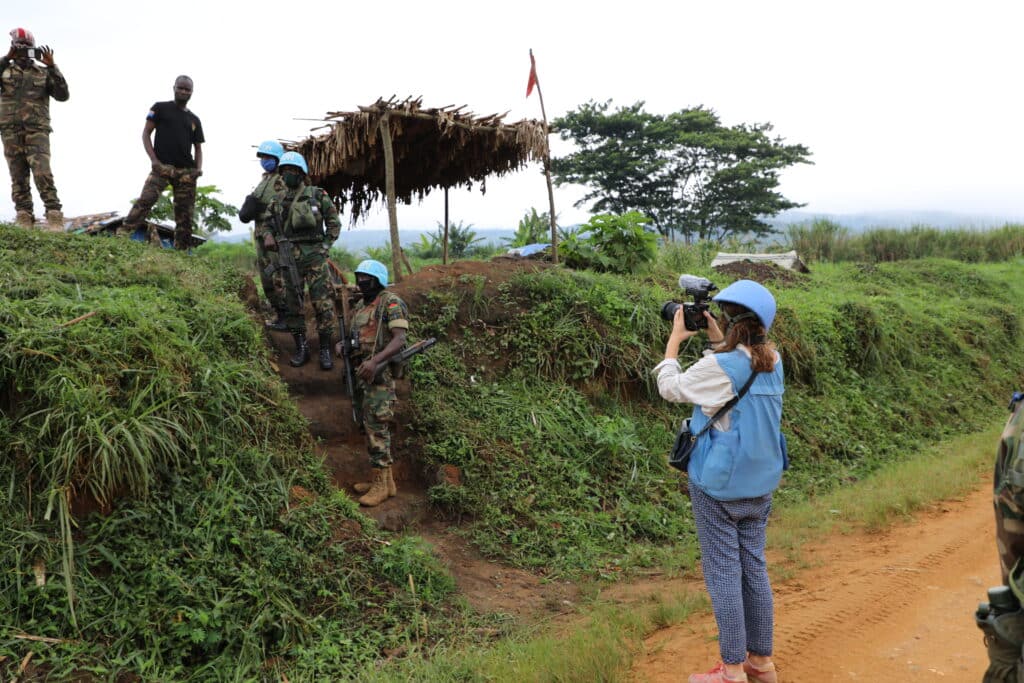
Rural journalism plays a vital yet often overlooked role in democratic life. In small towns, remote villages, and isolated regions, local reporters are often the only watchdogs monitoring public spending, documenting environmental impacts, investigating corruption, and keeping communities informed about health, education, and agriculture. Yet despite this importance, rural newsrooms face deep structural challenges, from safety risks to economic precarity, that threaten their ability to survive.
This article outlines the key challenges facing rural journalism globally and offers practical advice and opportunities for strengthening coverage and community impact.
Why rural journalism matters
Rural journalism is indispensable for democratic accountability and social cohesion. Local reporters in rural and remote areas often serve as the only watchdogs for public institutions, environmental issues, and community affairs. Yet many rural communities lack a dependable, independent news source.
According to the Medill Local News Initiative, a large share of U.S. news deserts are predominantly rural.
Where local outlets shrink, “news deserts” form, leaving communities less informed and more vulnerable to misinformation, corruption, and unaccountable local actors. Strengthening rural journalism supports democratic participation and community resilience.
In Spain, research shows that rural communities view local media not only as a source of information but also as a tool for recognition, participation, and mediation. Residents in depopulated areas value a “grassroots” or “activist” style of journalism that is deeply embedded in local life.
Rural journalism also goes far beyond agriculture. As a Spanish rural journalist, María Bosque, notes, “there is innovation, technology, and much more than just agriculture” happening in rural areas today.
Main challenges
- Economic sustainability:
One of the biggest structural challenges is financial viability. Traditional revenue sources, such as local advertising, are shrinking, especially in areas with declining populations. Many small towns simply lack the economic base to support a full newsroom.
The Brookings Institution’s report “Local Journalism in Crisis” highlights that 45% of U.S. news deserts are in rural counties, emphasizing how economic fragility undermines consistent local coverage.
- News deserts and media concentration:
News deserts, regions with little to no original reporting, are expanding, particularly in rural areas.
Media consolidation also worsens the problem. According to Giving Compass, hedge funds and private equity owners often cut staff, reduce local reporting, or shut outlets entirely, leaving communities with no reliable source of news.
- Skills, capacity, and isolation:
Rural reporters often work alone, travel long distances, and face risks when covering environmental conflicts, land grabs, extractive industries, or organized crime.
Many rural journalists also lack access to:
- Investigative or data specialists.
- Legal support.
- Safety training.
- Verification tools.
This reduces the depth of accountability reporting and can increase exposure to intimidation, harassment, and sometimes violence.
- Infrastructure & connectivity:
Poor internet, unstable electricity, and limited digital infrastructure hinder:
- Publishing and distribution.
- Digital subscriptions.
- Membership models.
- Collaborations with external outlets.
This also limits access to verification tools, mapping software, and remote training programs.
- Trust and community engagement:
Local communities value media that reflects their identities and needs. Without meaningful engagement and culturally relevant storytelling, rural journalism risks losing credibility.
Practical advice for rural journalists and newsrooms
Here are actionable strategies for journalists and editors working in rural environments:
- Risk assessment and safety planning
- Develop a travel safety protocol.
- Use check-in systems and emergency contacts.
- Train for digital security and conflict reporting.
- Lean into community engagement
- Hold public listening events or focus groups.
- Use local languages and culturally relevant storytelling.
- Co-create content with community members and invite them to contribute story ideas.
- Diversified funding models
- Combine revenue sources such as small memberships, community fundraising, grants, and sponsored local content, partnerships with NGOs or universities.
- Lean on technology wisely
- Use low-bandwidth tools for verification.
- Build workflows that work offline when connectivity is limited.
- Use messaging apps (WhatsApp, SMS) to both gather info and distribute news.
- Build collaborative networks
- Join cross-newsroom collaboratives to share investigative resources.
- Partner with larger media or non-profit outlets for capacity and reach.
- Engage in journalist associations or rural press networks.
- Protect sources and sensitive data
- Use secure messaging for sources, encrypt sensitive documents, and adopt a minimal data retention policy. Train staff in digital hygiene and legal risk management.
Opportunities to strengthen rural journalism
Despite serious challenges, there are promising paths forward:
- Non-profit and community models:
Non-profit newsrooms, cooperatives, and community-owned outlets are growing worldwide. They often rely on grants and donations to fill coverage gaps.
In depopulated areas, media can become a strategic actor in demographic revitalization. According to the Journalism Funders Forum, reinforcing local journalism can contribute to community resilience and reduce social isolation that often comes with demographic decline.
- Collaborative investigative projects:
Local startups and cross-regional collaborations are beginning to revive areas that once lacked consistent coverage. The Medill Local News Initiative notes that even some former news deserts are now reconnected to local reporting thanks to new digital outlets.
In Latin America, similar models are emerging. In Chile, for example, nearly half of the communes lack consistent coverage, but digital outlets, radio projects, and grassroots initiatives are forming what researchers call “news forests” rather than deserts.
- Audience-first format
Using local languages, radio, WhatsApp, and SMS based newsletters can reach people where they are and build loyal audiences even where broadband access is limited.
Conclusion
Rural journalism is essential to the health of local democracy, yet it remains one of the most vulnerable sectors of the media landscape. Strengthening it requires a combination of deep community engagement, sustainable funding models, better infrastructure, and supportive policy frameworks.
By embracing innovative models, investing in local storytelling, and highlighting the diverse realities of rural life, rural journalists can transform rural reporting into a powerful engine of accountability, resilience, and community renewal.